Encounters on Palm Beach
Contact and Conflict over Twelve Days in January
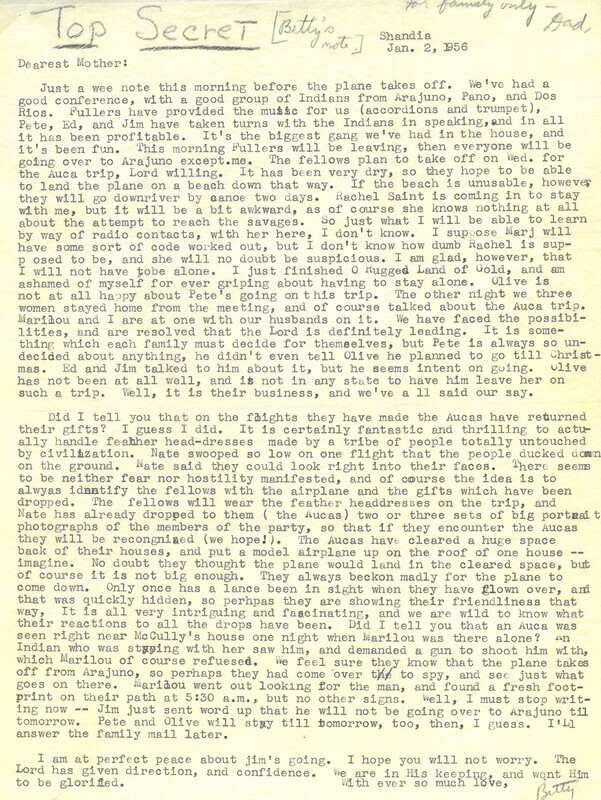
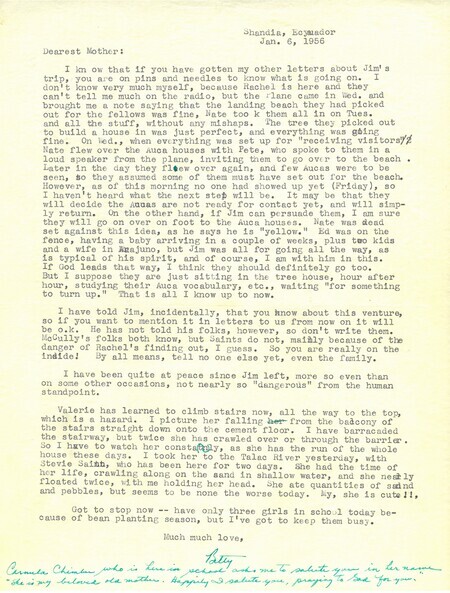
In the first days of 1956, the five missionary families set in motion what they called “Operation Auca,” the bold next steps in their efforts to evangelize the unreached Waorani people. After weeks of planning, flyovers shouting Wao words of goodwill, and bucket drops bearing gifts, the men were eager for a face-to-face encounter with Waorani men and women. Keeping their plans secret from fellow mission workers, their mission administration, and even some family members, the missionaries launched their operation on the first Monday of the new year. The next two weeks, outlined below, witnessed the gamut of human emotion experienced by the five families—trepidation, optimism, elation, dread, and grief—and resulted in a tragedy that would captivate the American public. This account of “Operation Auca” is pieced together from various, and sometimes contradictory, sources—radio messages, letters from the wives, interviews with search party members and the Waorani men and women involved, as well as film and photographs from Nate Saint’s cameras.
Monday, January 2, 1956
After the new year, Jim Elliot, Ed McCully, Nate Saint, Roger Youderian, and Peter Fleming gathered at Arajuno, the McCully’s mission station, to collect supplies and prepare for travel to the dense rainforest where they had spotted Waorani settlements from the air.
Tuesday – Wednesday, January 3-5, 1956
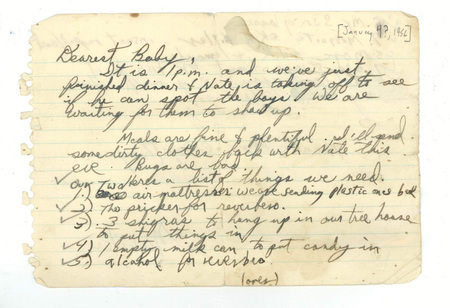
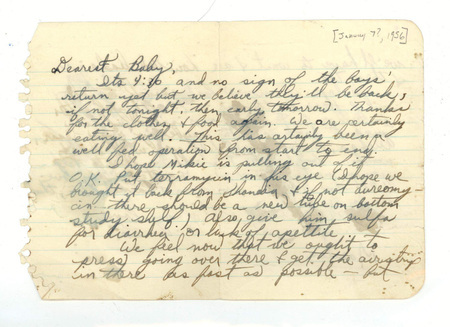
On Tuesday, Nate Saint flew McCully, Youderian, and Elliot to a sandbar on the Curaray River, only a few miles from the Waorani clearing. The men christened their camp “Palm Beach,” set up a prefabricated tree house, and reinforced a landing strip in the sand for the plane. The next day Saint picked up Peter Fleming and made one final aerial pass over the Waorani settlement, using a loudspeaker to invite the Waorani to a friendly visit on the beach. After establishing the camp, the missionaries swam in the Curaray River, read novels out loud to the group, and practiced their Wao words and phrases, while waiting for their first glimpse of the Waorani. To update their families, Nate Saint made radio contact with his wife Marj on a pre-arranged schedule.
Friday, January 6, 1956
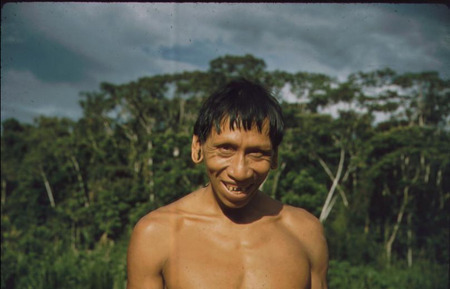
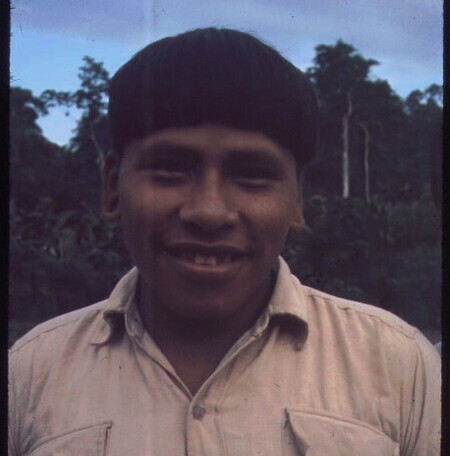
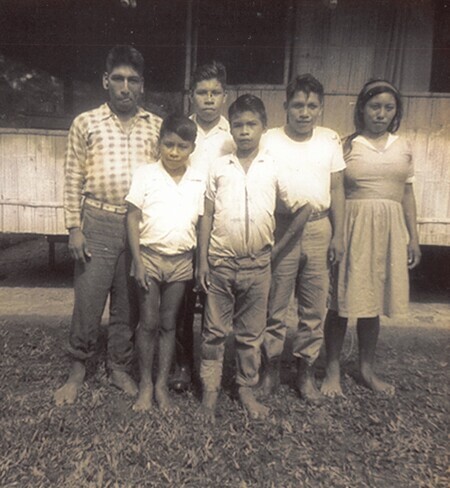
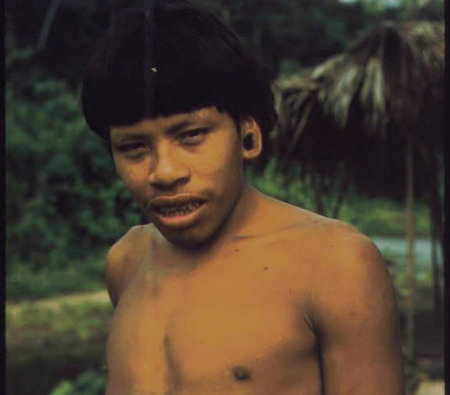
On Friday morning, five Waorani emerged from the rainforest and approached the missionaries. After years of planning and praying, the five men were face-to-face with three Waorani – a man the missionaries nicknamed George (real name Naenqiwi, sometimes transliterated as Naenkiwi), a young woman they called Delilah (Guiimadi or Gimari), and an older woman named Mintaka, Guiimadi’s aunt who was serving as her chaperone on the visit.
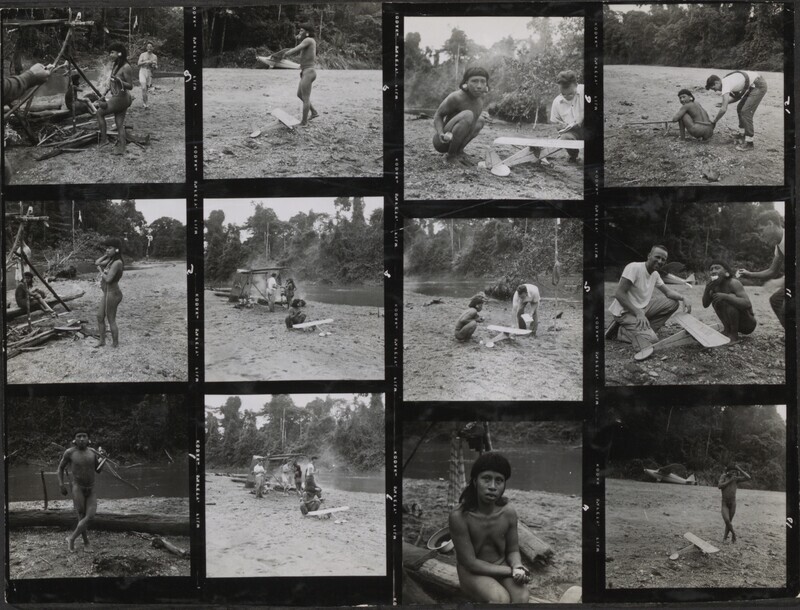
Using their broken Wao phrases, the missionaries communicated they were friendly and non-threatening, offering their visitors food and introducing them to Saint’s yellow Piper Cub airplane. The Waorani were fascinated with both the full-sized Piper Cub and the model airplane the men brought as a teaching tool. Using Saint’s camera and recorder, the men captured the Waorani sitting on the beach, playing with the model airplane, and inspecting the men’s tools. Later in the afternoon, Nate took Naenqiwi up in the plane and flew low over the Waorani clearing. From the ground, the Waorani recognized Naenqiwi, shouting and waving ecstatically at his friends. Back on Palm Beach, the visitors retreated into the jungle in the late afternoon, except for Mintaka, who stayed late into the night talking to the missionaries.
Saturday, January 7, 1956
On Saturday, all was quiet on Palm Beach. The five men, elated at their successful first meeting with the Waorani, planned for the next encounter.
Miles away, the Waorani visitors to Palm Beach wound their way through the jungle on their way back to their village. Before reaching the settlement, they met another party of Waorani, including Guiimadi’s brother, Nampa. This larger group explained that they, too, were going to visit the strangers at the beach. But their curiosity to see the outsiders quickly waned when Nampa noticed his sister Guiimadi among Naenqiwi’s party. Furious to find his unmarried sister in a compromising situation with an unsuitable marriage prospect, Nampa argued violently with Naenqiwi. Enraged by Naenqiwi’s defiance, Nampa resolved to kill the “cowode” (outsiders), whose presence had started the trouble. After all, “cowode” were cannibals, the Waorani were convinced, and the safest response was immediate aggression. The two Waorani parties returned to the settlement together after resolving to attack the strangers the next day.
Sunday, January 8, 1956
Morning dawned over Palm Beach. Early that afternoon, a party of six Waorani men (Geuquita, Nampa, Nimonka, Quemo, Yowe, Mincaye) and four women (Akawo, Mintaka, Dawa, Meñemo) carefully approached Palm Beach. A few of the women appeared on the other side of the Curaray River and signaled to the men. When the missionaries spotted them, Jim Elliot and Peter Fleming waded into the river to greet the new visitors. And then the spears descended.
Jim Elliot was speared in the river. The raiding party speared Peter Fleming when he reached the other shore. Nate Saint, Ed McCully, and Roger Youderian were killed in the sand on Palm Beach, Youderian near the radio. The men’s revolver was fired in the tussle, grazing Nampa, who later died from the infected gunshot wound.
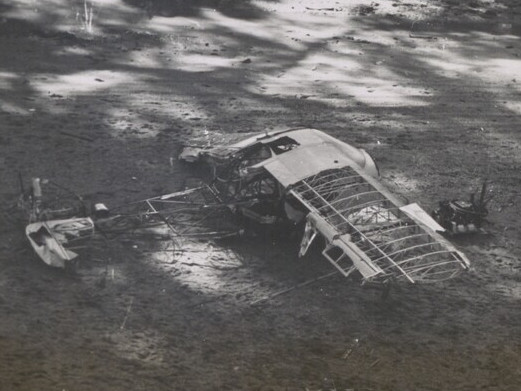
When all five missionaries lay dead, the Waorani attacked the plane, tearing the yellow canvas from the wings. After ransacking the camp and scattering the supplies, the raiding party vanished into the rainforest. Back at their settlement, the Waorani burned their houses to the ground and fled into the jungle, the customary ritual after a revenge killing.
Back at Shell Mera, Marj Saint waited by the station radio for the 4:30 p.m. call from her husband. On Palm Beach, Nate Saint’s watch had stopped at 3:12 p.m.
Monday-Wednesday, January 9-11, 1956
On the morning of January 9, Johnny Keenan, an MAF pilot who worked with Saints, flew over Palm Beach with Barbara Youderian aboard. The two spotted the skeletal remains of the Piper Cub—but no sign of the men.
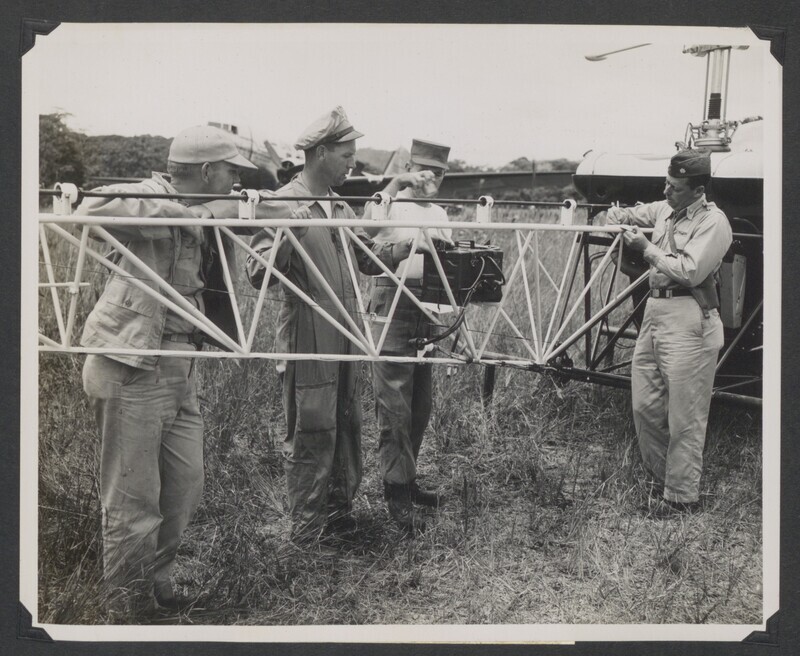
Anxiety mounted as the five wives debated what to do. Following the advice of Larry Montgomery, a pilot with Wycliffe Bible Translators, the missionaries contacted U.S. Caribbean Command, based in the Panama Canal Zone. On Wednesday, two USAF C-47 cargo planes landed at Shell Mera, carrying personnel and a dismantled helicopter to lead the search and rescue efforts from the air.
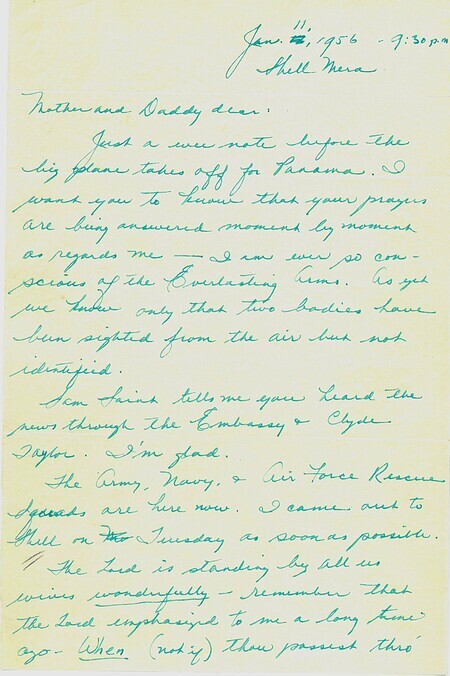
Another search party, composed of area missionaries, local Quichua, and the Ecuadorian military, launched rescue efforts from the ground, starting down the Curaray River toward Palm Beach.
Thursday-Friday, January 12-13, 1956
Flying near Palm Beach on January 12, helicopter pilot Major Macolm Nunberg spotted four bodies submerged in the Curaray River. Nunberg returned to Shell Mera that evening to inform Elisabeth Elliot, Olive Fleming, Marilou McCully, Marj Saint, and Barbara Youderian that there were no survivors.
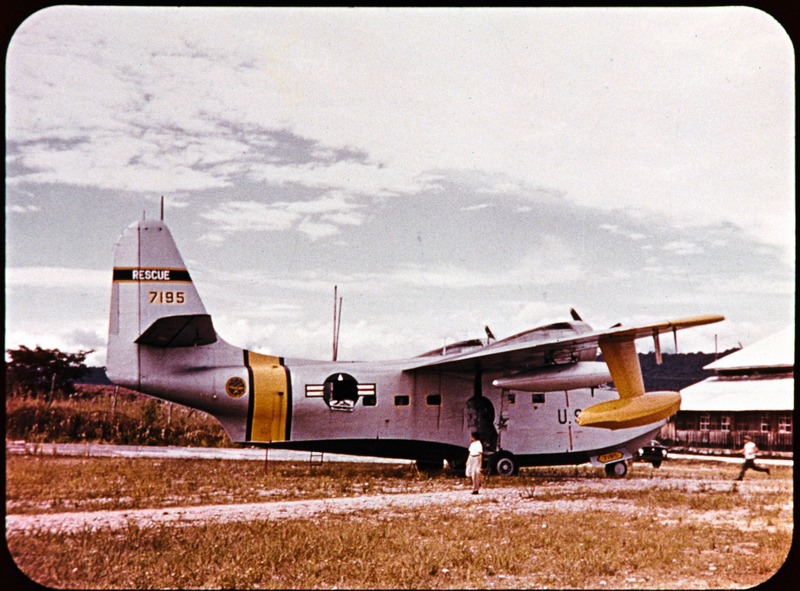
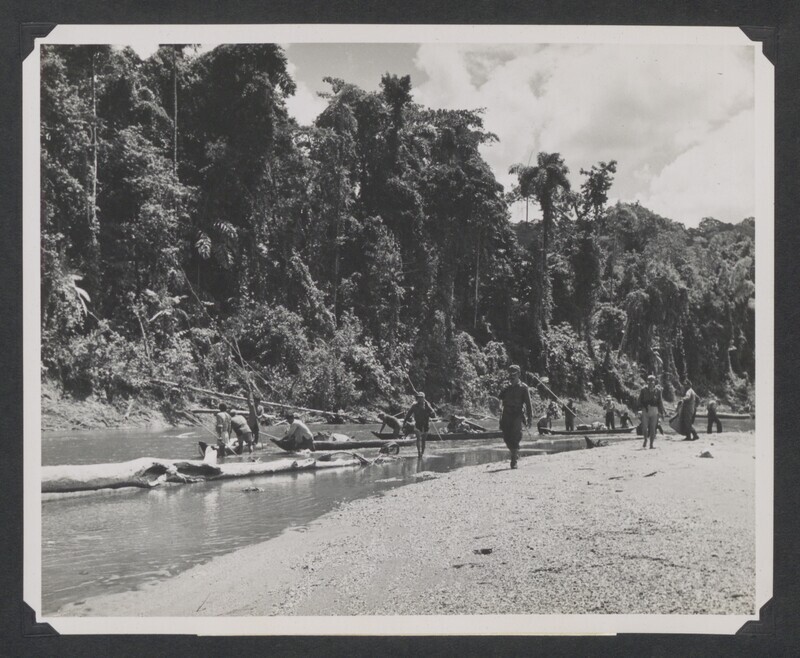
On January 13, the ground party reached Palm Beach, where they recovered and identified the bodies of Jim Elliot, Peter Fleming, Nate Saint and Roger Youderian. Ed McCully’s body was briefly spotted by an advance party of Quichua a day earlier before it disappeared downriver. Lashed by a violent storm, the search party buried the four missionaries on Palm Beach at the foot of the treehouse where they spent their last six days.
After collecting the scattered supplies and personal belongings, including Nate Saint’s camera, the search party returned home on January 14.
Saturday, January 14, 1956
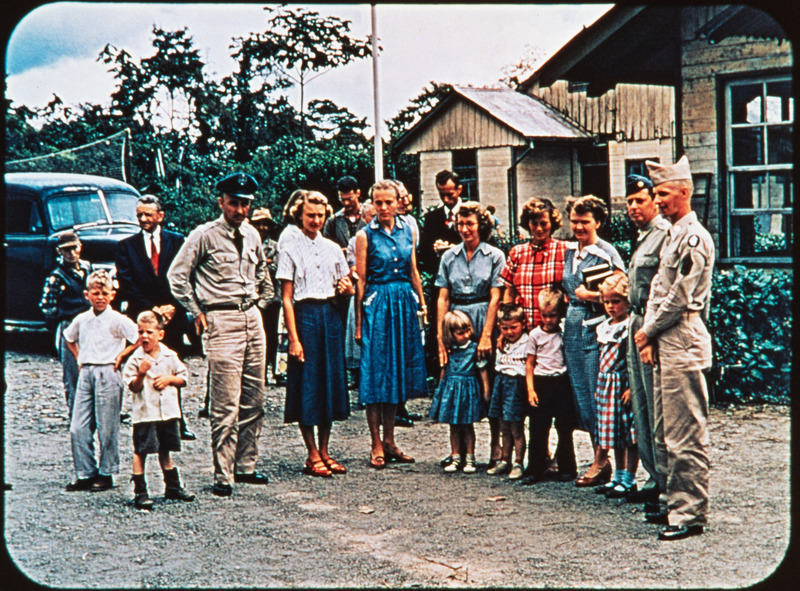
Escorted in a United States Air Force plane, the five wives glimpsed Palm Beach from the air and dropped wreaths from the plane onto their husbands’ fresh graves.
After years of praying and months of preparation, “Operation Auca” concluded with four shallow graves on a sandy beach, five widows, and nine fatherless children.