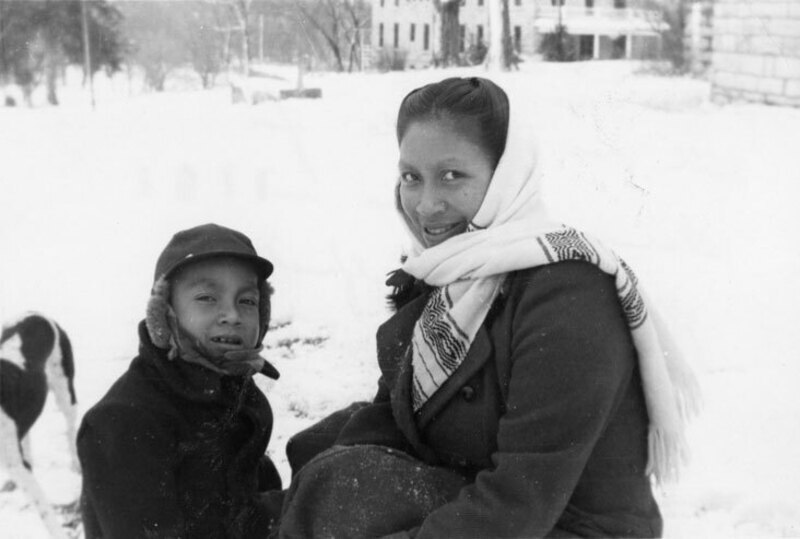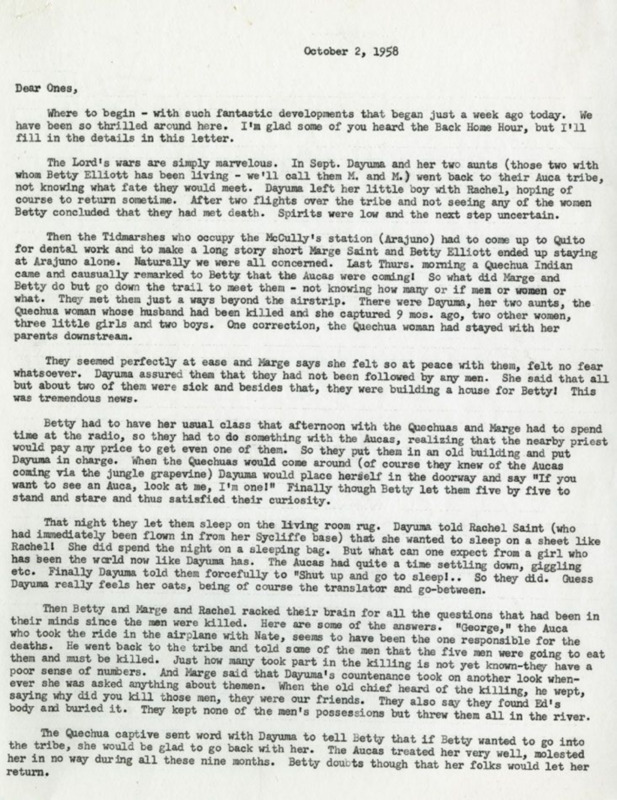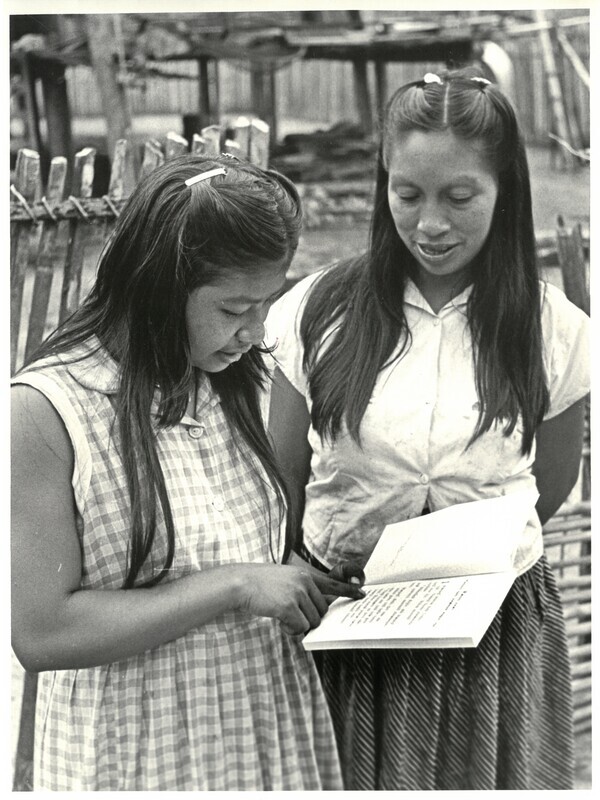
Dayuma, 1931-2014
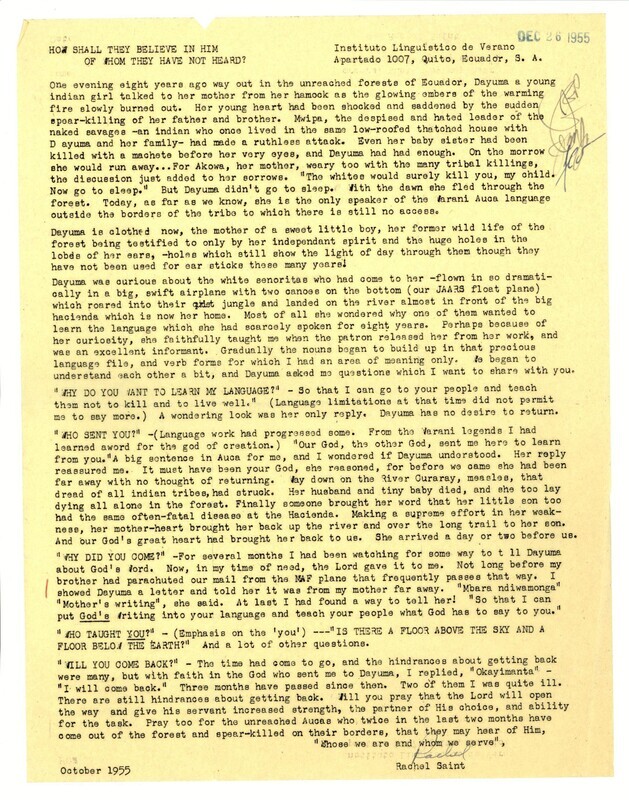
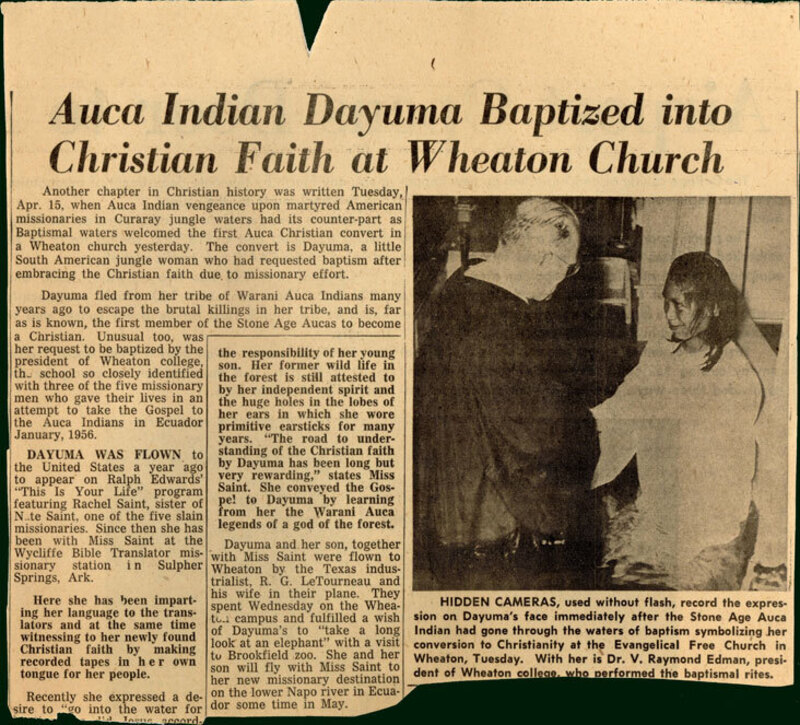
Born around 1930 in a settlement of the Waorani Geketaidi kinship group in the eastern Ecuadorian Amazon, Dayuma fled her village after her father was killed by a fellow Waorani spearman when she was about 13 years old. Taken in by neighboring Quichua, she lived in de-facto slavery at Hacienda Ila on the edge of the rainforest. In February 1955, Dayuma met Rachel Saint and began helping her with Wao language study. It later became clear that Dayuma spoke a corrupted form of the language, having repressed or forgotten much of her native tongue. Nonetheless, Rachel Saint became convinced that God had chosen Dayuma to take the Gospel to her people.
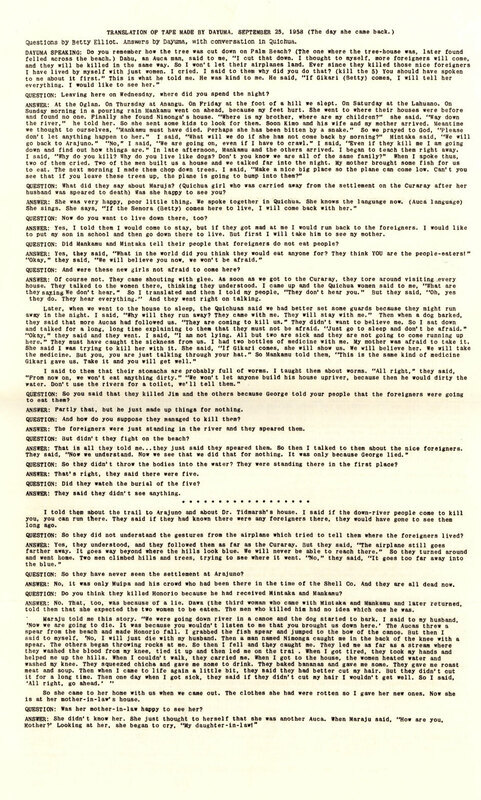
In 1957, two Waorani Geketaidi women, Mintaka and Mankamo, left their village seeking news of their estranged niece, Dayuma. Months later, Dayuma returned to her village with Mintaka and Mankamo, hoping to prepare the Waorani for Elisabeth Elliot and Rachel Saint to join her. She explained that the Waorani had nothing to fear from the two women (and later offered similar assurances regarding the Waorani to Saint and Elliot when they joined the community later that year). She also arrived with gifts—trade goods the Waorani wanted—and strange stories about a creator God named Waengongi, after a mythical Wao figure. Because of her Waorani heritage, as well as her understanding of the outside world, Dayuma became an essential cultural bridge between the missionaries and her people.
Leading her kin group to a new settlement on the Tiwaeno river, Dayuma brought a new way of life – along with new challenges – to the Waorani. Relaying the Bible stories taught to her by Rachel Saint, Dayuma was the first evangelist to the Waorani, and some members of her extended family group continue to be among the most committed Wao Christians. Dayuma’s later role in her native community proved to be complex. Shaped by her experiences among the Quichua and her close contacts with American missionaries, she played a crucial function in the cultural evolution of the Waorani people over the next several decades. By introducing Christianity, new trade goods, and literacy, among other rapid changes, Dayuma occupied an outsized position of influence even in traditionally egalitarian Waorani community life. In 1962, she married Come (Komi), the son of Geuquita, and had four children. In 1977, she left Tewæno to help her son Sam (Ignacio) Padilla establish a new Waorani settlement at Toñampade. She died on March 1, 2014, in Puyo, Ecuador and was buried in Toñampade.