Introduction
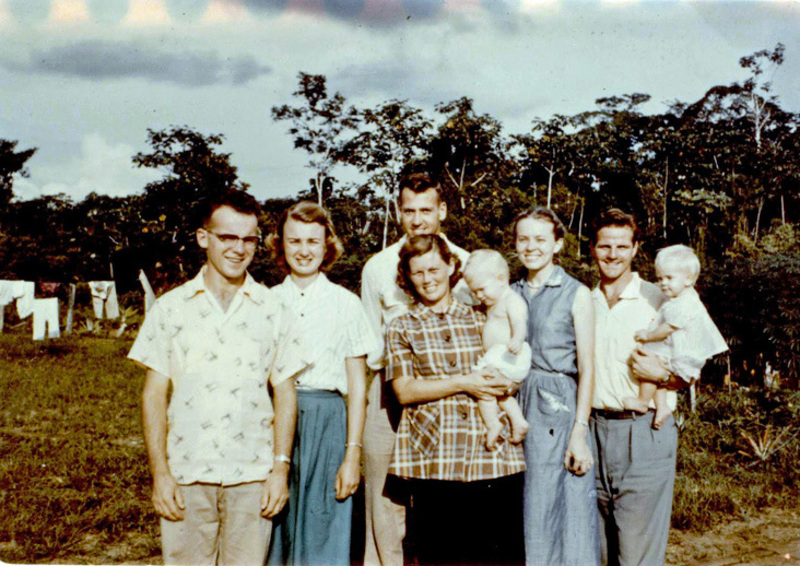
On January 3, 1956, five American missionaries—Jim Elliot, Peter Fleming, Ed McCully, Nate Saint, and Roger Youderian— embarked on a long-cherished project: to make contact with the Waorani people. An indigenous people group from the Amazonian region of Ecuador, the Waorani were renowned for their fierce independence and isolationist stance toward outsiders. Called “Auca” by their enemies, a Quichua word meaning “savage,” the Waorani were both feared by neighboring people groups and decimated by internal warfare.
After months of planning and careful preparation, the five men launched “Operation Auca,” a dangerous and daring mission to be the first Westerners to contact the Waorani, document their language, and share the Christian message of forgiveness, hope with Waorani men and women trapped in cycles of violence and despair. Fortified with a few Wao phrases, camping supplies, and conviction in their call to go, the five men boarded a small yellow plane bound for the interior of Ecuador’s dense rainforests while their wives and small children looked on.
They never returned. Six days later, all five men were dead, speared to death in a surprise attack by Waorani warriors.
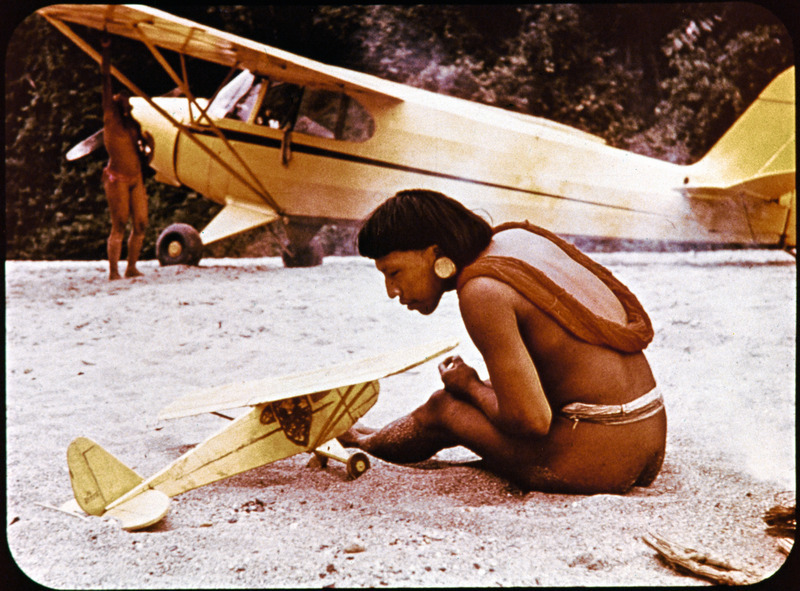
This exhibit explores the story of “Operation Auca.” What began as an isolated tragedy in the remote jungles of Ecuador became a media firestorm, reverberating through the American cultural imagination as a gripping narrative of devastating loss and inspiring faith.
In commemoration of the 70th anniversary of Operation Auca, To Carry the Light Further narrates the details of the mission — the individuals and institutions who played a part in the operation, the immediate aftermath of the murders —and its long-term effects, especially for the Waorani people.
Exhibit Sections
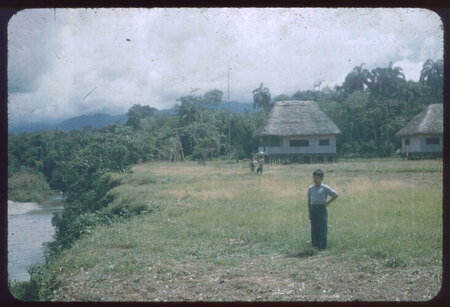
Pioneer Territory
People, Places, and Early Preparation
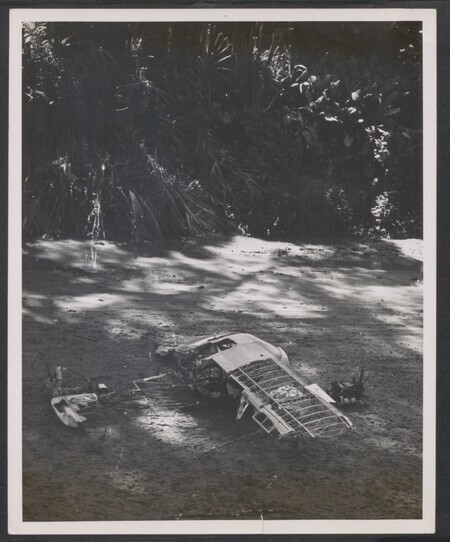
Encounters on Palm Beach
Contact and Conflict over Twelve Days in January
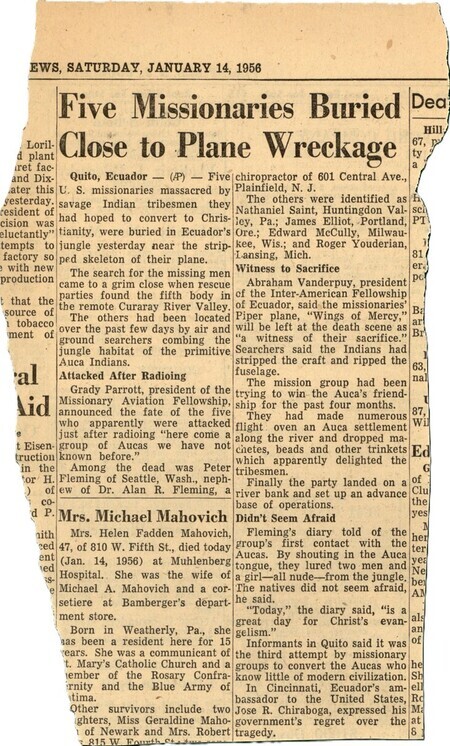
The Aftermath
Five Widows & An International Media Sensation
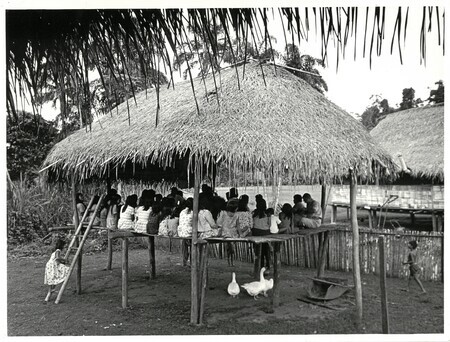
New Marching Orders
Long-Term Impacts & Continuing Work
Explore the Collection
Discover these materials through multiple perspectives:
Collection as Data
Download this collection's metadata in a variety of reusable formats.